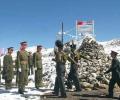
The two sides have already held at least 12 rounds of talks between local commanders and three rounds of talks between major general-rank officials but no positive outcome came out from the discussions, they said.
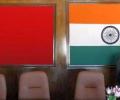
The sources said the focus of the talks was to take forward the disengagement process in friction points like Hot Springs, Gogra and Depsang in eastern Ladakh.

Several people on Twitter also expressed their anguish after the images surfaced.

Security Expert Bruce Riedel, who in an interview with rediff.com shortly after the Pathankot terror attacks began said that the attack underscored the determination of jihadist groups in Pakistan to sabotage any attempt at detente with India, writes in the Daily Beast that despite the US putting the Jaish-e-Mohammad on the terrorist sanctions list years ago, the outfit continues to coddle the Pakistani army.

A surprise attack by Hamas militants from Gaza at daybreak killed at least 200 Israelis on Saturday even as Prime Minister Benjamin Netanyahu declared "war" and said his country would extract an "unprecedented price" from its enemy.

'The Chinese are retaining geostrategic pressure on India by keeping troops there and building infrastructure continually.'

The firing and mortar shelling continued night long in several sectors of Poonch and Rajouri districts.

'In the 1971 War my battalion suffered 4 casualties after fighting for 14 days.' 'In Operation Blue Star, I lost 19 men in just one hour.'

There is no conceivable reason for any big power to put road blocks on the path of an India-Pakistan normalisation process, asserts Ambassador M K Bhadrakumar.

The CDS has the option to focus on key areas of capability development to fight new generation wars or get bogged down in trying to bring cosmetic changes to humour the political leadership, asserts Brigadier Narender Kumar (retd).
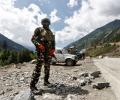
At a virtual media briefing, Ministry of External Affairs (MEA) Spokesperson Anurag Srivastava said disengagement of troops is a complex process which would require mutually agreed 'reciprocal actions'.
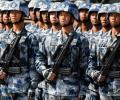
Chinese military has also deployed a sizeable number of its troops in Galwan Valley, the site of the violent clashes on June 15 that left 20 Indian soldiers dead.

'The Chinese fault lines are tremendous and we need to exploit them.'

'A couple of hours before the H-Hour, the Kupwara division opened small arms and mortar fire on posts opposite its area of operation.' 'This was a diversionary tactic.' 'As Pakistani forces began to react to the firing, special forces teams began to slowly cross the LoC into PoK.' Nitin Gokhale reveals how planning for the surgical strikes began hours after the Uri attack.

'No aeroplane in the world has been designed to switch off its engines above 14,500 feet.' 'Thanks to a lot of practice, we were able to execute a flawless landing at DBO at 0900 hours on 31st May, creating history.'
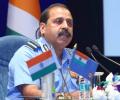
The Indian and Chinese troops are engaged in a five-month bitter standoff in eastern Ladakh.
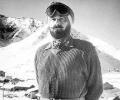
Lieutenant General Harbakhsh Singh, GOC, Western Command, disobeyed the then army chief and took on a superior Pakistani armoured column. The Indian Centurion tanks outgunned the more modern Pakistani Patton tanks in the battle at Khem Karan, that proved the turning point of the 1965 War. Brigadier Gurmeet Kanwal (retd) salutes the Soldiers' General.

'The adversary will always exploit India's anti-national elements.'

Access to Sabang Port will allow the Indian Navy to dominate Malacca Strait more effectively, reports Ajai Shukla.
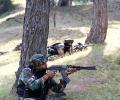
'If the strength of foreign terrorists can be brought to negligible levels there will be few takers for militancy.' 'That is why it is important to neutralise the terrorists at their launch pads,' advises Lieutenant General Syed Ata Hasnain (retd).

'Why wouldn't so strategically-minded an adversary, such as China, not militarily exploit to the maximum Indian timidity, stupidity, and cupidity all along the LAC and legitimate, as it has done so often in the past, the fait accompli of incremental territorial grabs which, by the way, is its strategy and policy as implemented on the ground?'

'As one might expect, he believed the Indians were preparing their nuclear weapons for deployment. It took us a few hours - and remarkably good work by our teams on the ground in New Delhi and Islamabad - to convince each side that the other was not preparing for nuclear war'

Chastened by the Kargil conflict, Pervez Musharraf will be remembered for gradually lowering the profile of terrorism and seeking a realistically negotiated settlement to the issue of Jammu and Kashmir, notes Ambassador G Parthasarathy, who served as India's high commissioner to Pakistan when Musharraf seized power in a coup in October 1999.
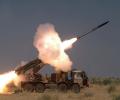
The six Pinaka Regiments comprise of 114 Launchers with automated gun aiming and positioning system and 45 command posts to be procured from M/s TPCL and M/s L&T, and 330 vehicles to be procured from M/s BEML.

The Chinese have just one commander for all the forces confronting India. Commanders of all these forces answer to one man, and one headquarter. India, on the other hand, offers a diversity of options that is a military embarrassment in the 21st century. In Arunachal and Sikkim-Bhutan, the Eastern Army Commander is in charge. In the Uttarakhand (central) sector, it will be the Central Army Commander. The Himachal-Tibet border is the domain of the Western Army Commander. And all of Kashmir and Ladakh further on, the Northern Army's. Effectively, an array of at least eight 'three-star' commanders will be arrayed against one Chinese, says Shekhar Gupta.
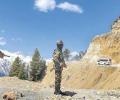
'India is not going to accept whatever the Chinese say. That is not going to happen.'

'The potential of one such LAC engagement going out of control and leading to heavy casualties cannot be ruled out,' warns Lieutenant General Syed Ata Hasnain (retd).

"I congratulate all Indian citizens on the occasion of Kargil Vijay Diwas. The sacrifices made by soldiers, which helped us win the Kargil war, will always be a source of inspiration for the armed forces," Rajnath Singh told reporters after paying the tributes.

Keeping the contents of the BBC documentary aside, Rishi Sunak's response needs to be viewed in the backdrop of Britain's historically close relations with Pakistan, argues Lieutenant General Prakash Katoch (retd).
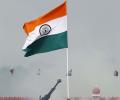
The new 17 Strike Corps with 80,000 troops and a budget of Rs 64,000 crore will provided the much-needed offensive capacity against China. R S Chauhan reports.

'Pakistan's recent utterances and tendency to use pinpricks to try our patience appear reminiscent of 1965. We are a strong nation, emerging stronger,' says Lieutenant General Syed Ata Hasnain (retd).

The Tibetan nation still lives under the yoke of the Chinese Communist Party, and Beijing today has a guilty conscience; this creates a great uneasiness for Xi Jinping and his colleagues observes Claude Arpi.

'India has to prepare for future warfare where kinetic use of force at the border will be limited. War will take place in the realms beyond the border.'
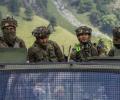
'A breakthrough in eastern Ladakh leading to disengagement and creation of a buffer zone will obviate the need of military deployment through the winter months ahead,' notes Ambassador M K Bhadrakumar.

'The PLA will not voluntarily withdraw from Indian territory.'
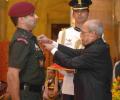
'India showcased its ability to launch multiple Special Forces strikes simultaneously across a well defended front.' 'Through these strikes Pakistan was given a glimpse of the full range of India's military capabilities,' says Brigadier Gurmeet Kanwal (retd).

Official sources said withdrawal of tanks and other armoured elements from certain friction points is nearing completion while pulling back of troops from the North bank areas is being undertaken.
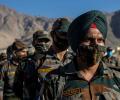
Did Xi deliver a message to Modi at Mamallapuram, which though couched in a velvet glove was time-bound? What was that message? It is clear Indian/Israeli/US spy satellites would not have missed detecting Chinese troop movements towards the Ladakh-Tibet frontier. Then why did some important functionaries in the Government of India choose to only ask the Russians about this in April 2020? Was Russian reassurance of Chinese troop movements being part of a routine exercise the reason that the Leh-based XIV Corps did not mobilise itself for its annual summer exercises near the LAC? A fascinating excerpt from Iqbal Chand Malhotra's new book Red Fear: The China Threat.
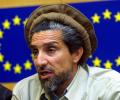
Ahmed Shah Massoud's assassination, 9/11 and the defeat and ejection of the Taliban suggested a break in Afghanistan's history, but the events of August 2021 and the Taliban's return shows how deeper continuities remained in place, points out T C A Raghavan, former Indian high commissioner to Pakistan.
'China would rather tie us down; and bleed us as much as it can so that we aren't able to lift our heads to face them.'
 © 2026 Rediff.com - Advertise with us - Disclaimer - Privacy Policy - Sitemap - Feedback - About us - Terms of use - Grievances